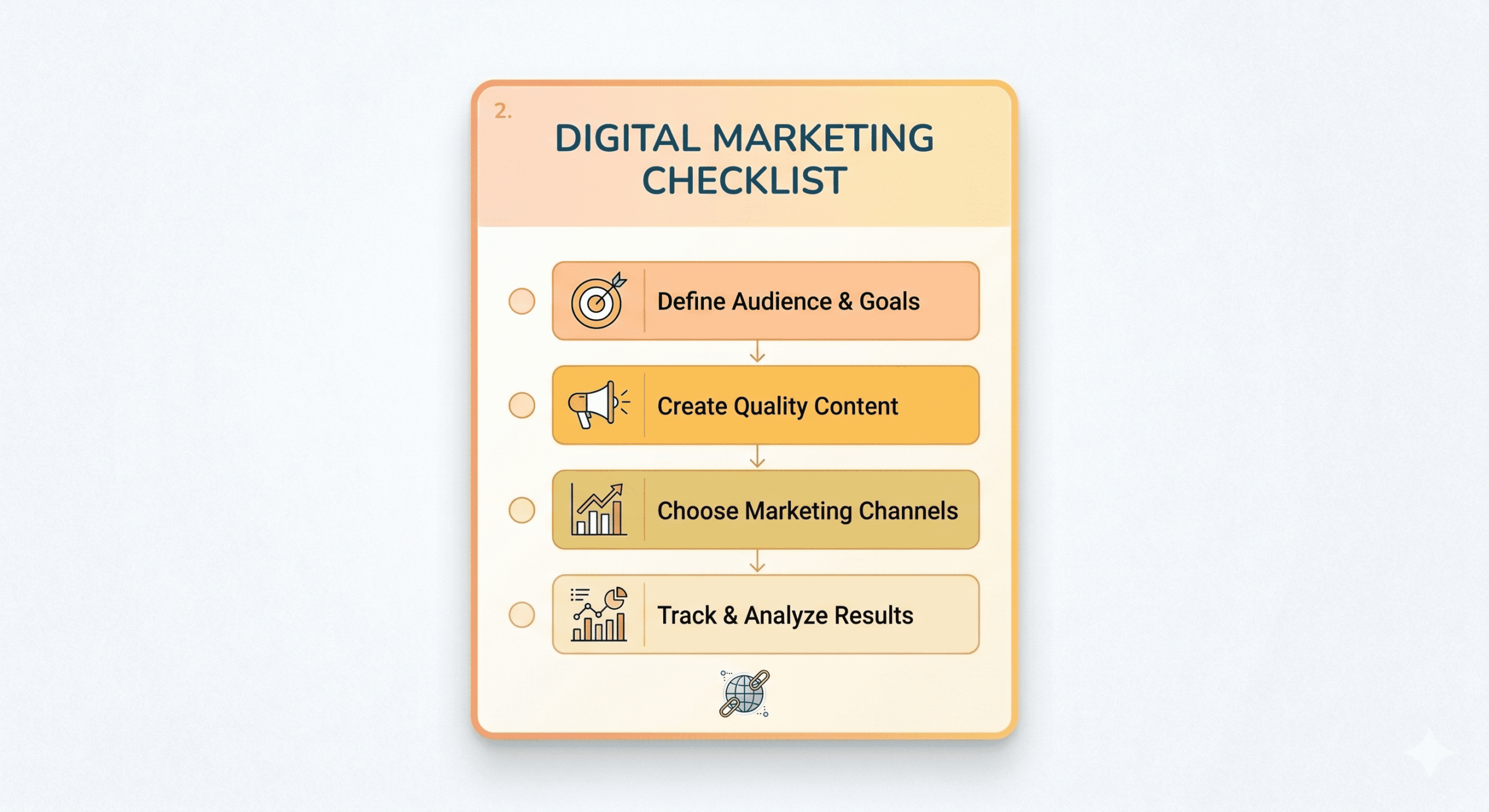
Digital Marketing Checklist
Table of Contents
Navigating the complex landscape of online growth can feel like trying to solve a puzzle with missing pieces. Whether you are a small business owner looking to increase brand awareness or a seasoned marketer managing multiple campaigns, having a comprehensive digital marketing checklist is the only way to ensure nothing falls through the cracks. This guide serves as a roadmap to help you streamline your workflow, eliminate guesswork, and ensure that every dollar spent on advertising yields a measurable return. By following this structured approach, you can bridge the gap between “just posting” and executing a high-impact strategy that converts strangers into loyal customers.
Essential Foundations: Your Digital Marketing Checklist Preparation
Before you dive into creative assets or ad spend, you must prepare your environment. Skipping the groundwork is a recipe for wasted resources. This stage is about auditing what you currently have and setting the boundaries for what you want to achieve.
- ✅ Audit existing digital assets: Review your current website, social media profiles, and email lists to see what is performing well and what needs a refresh.
- ✅ Define SMART goals: Ensure your objectives are Specific, Measurable, Achievable, Relevant, and Time-bound (e.g., “Increase website traffic by 20% in 90 days”).
- ✅ Secure your domain and hosting: Verify that your website’s SSL certificate is active and your hosting plan can handle potential traffic spikes.
- ✅ Identify your Unique Selling Proposition (USP): Clearly articulate what makes your brand better or different from the competition.
- ✅ Set a realistic budget: Determine how much you are willing to spend on paid media, software tools, and content production.
Planning Stage: Building the Strategy
Strategy is the “why” behind your “what.” In this phase, you define your target audience and the specific channels you will use to reach them. A well-planned campaign prevents the “spray and pray” approach that plagues many ineffective marketing efforts.
- ✅ Develop detailed buyer personas: Create profiles for your ideal customers, including their demographics, pain points, and online behaviors.
- ✅ Conduct keyword research: Use tools like SEMrush or Ahrefs to identify the search terms your audience uses to find solutions in your industry.
- ✅ Perform a competitor analysis: Take note of your competitors’ strengths and weaknesses to find gaps in the market you can exploit.
- ✅ Select your primary channels: Decide whether your audience is more likely to engage on LinkedIn, Instagram, Google Search, or through direct email.
- ✅ Map the customer journey: Outline the steps a user takes from first discovering your brand to making a final purchase.
Creation Stage: Developing High-Impact Assets
This is where your vision takes physical (or digital) shape. The creation stage focuses on producing the content and technical infrastructure required to engage your audience. Quality here is non-negotiable, as your content is often the first impression a lead has of your business.
- ✅ Write compelling copy: Draft blog posts, ad headlines, and landing page text that speaks directly to your persona’s needs.
- ✅ Design visual elements: Create high-quality images, infographics, and videos that align with your brand’s aesthetic and color palette.
- ✅ Build optimized landing pages: Ensure each page has a single, clear call-to-action (CTA) and is designed to load quickly on all devices.
- ✅ Create lead magnets: Develop valuable resources like e-books, checklists, or webinars to encourage users to trade their email addresses for information.
- ✅ Establish an editorial calendar: Organize your content production schedule to ensure a consistent flow of information across all platforms.
Publishing or Execution Stage: Going Live
Launching a campaign is more than just hitting the “publish” button. It requires a final technical check to ensure that the user experience is seamless and that your data tracking is working correctly. This is a critical step in your digital marketing checklist to avoid technical glitches that could ruin a launch.
- ✅ Install tracking pixels: Ensure Google Analytics, Meta Pixel, and other tracking codes are properly embedded on your site to capture user data.
- ✅ Verify mobile responsiveness: Test your landing pages and emails on multiple mobile devices to ensure the layout remains functional.
- ✅ Optimize for On-Page SEO: Check that your meta titles, descriptions, and H1 tags are all aligned with your target keywords.
- ✅ Test all links and forms: Click every link and fill out every contact form to make sure there are no “404 Error” pages or broken submissions.
- ✅ Schedule social media posts: Use a management tool to time your updates for when your audience is most active online.
Scaling Success with Your Digital Marketing Checklist
Once your campaign is live, the work shifts from creation to optimization. The best marketers don’t set and forget; they analyze, tweak, and scale. This stage is where you turn raw data into actionable insights to improve your return on investment (ROI).
- ✅ Monitor key performance indicators (KPIs): Track metrics like click-through rates (CTR), conversion rates, and cost per acquisition (CPA) daily.
- ✅ A/B test your creative: Experiment with different headlines or images to see which version performs better with your audience.
- ✅ Execute an email nurture sequence: Follow up with new leads immediately through automated emails that build trust and move them toward a sale.
- ✅ Engage with your community: Respond to comments, messages, and mentions on social media to build brand loyalty and humanize your business.
- ✅ Review your digital marketing checklist weekly: Use your data to pivot your strategy and focus your budget on the highest-performing channels.
Pro Tips for Advanced Marketing
To truly stand out, you need to go beyond the basics. These advanced tips will help you squeeze more value out of every campaign and keep your brand ahead of the curve.
- ✅ Repurpose your content: Turn a single long-form blog post into a video, five social media graphics, and an email newsletter to maximize reach.
- ✅ Implement retargeting ads: Use “warm” audiences—people who have already visited your site—to serve specific ads that encourage them to return and finish their purchase.
- ✅ Focus on site speed: Even a one-second delay in load time can significantly drop your conversion rate; use image compression and caching tools to keep things fast.
- ✅ Leverage User-Generated Content (UGC): Encourage your customers to share their experiences and feature their photos or reviews in your marketing materials for added social proof.
Conclusion
Successfully growing a brand online is not about making one massive right move; it is about making hundreds of small, correct choices consistently. By utilizing a comprehensive digital marketing checklist, you remove the emotional stress of marketing and replace it with a repeatable, data-driven process. From the initial preparation of your assets to the final optimization of your ad spend, every step in this guide is designed to move you closer to your business goals. Now that you have the framework, it is time to take action. Start by auditing your current assets today, and watch how a structured plan transforms your digital presence. If you’re ready to take your brand to the next level, start implementing the first three steps of this checklist right now!