Search Intent in SEO: Types Explained With Examples
Search intent in SEO is the reason a person makes a search. Understanding that reason helps you create a page that answers the real question behind a keyword. A person looking for an explanation needs different content from someone comparing products or ready to buy. Search intent analysis helps you select the right page type, structure, and next step for each topic.
What is search intent?
Search intent is the goal a searcher wants to accomplish. The wording of a query provides clues, but the search results provide useful additional evidence. For example, “what is email marketing” suggests a definition or guide, while “best email marketing software for small business” suggests a comparison. Intent is not always perfectly clear, and one query can have mixed intent, so validate your assumptions.
The four common types of search intent
SEO practitioners commonly group intent into four categories: informational, navigational, commercial investigation, and transactional. These labels are practical planning tools rather than rigid rules. A search can combine needs, and results can vary by location, device, and context.
Informational intent
Informational searches are made to learn something, solve a problem, or understand a process. Examples include “how to do keyword research,” “what is search intent,” and “why is my website slow.” Useful formats include tutorials, explainers, checklists, glossaries, and troubleshooting guides. Answer the main question early, then add steps, examples, caveats, and links to deeper resources.
Navigational intent
Navigational searches help people reach a particular website, brand, or page. Examples include a company name, a brand plus “login,” or a named tool’s official documentation. The searcher may already know where they want to go. A business should make its official pages easy to identify, maintain clear page titles, and avoid creating generic content that does not satisfy the brand-specific need.
Commercial investigation intent
Commercial investigation happens when a searcher is evaluating options before deciding. Examples include “best keyword research tools,” “SEO template comparison,” and “A versus B software.” Helpful content may include comparison tables, pros and cons, selection criteria, screenshots, limitations, and recommendations for different use cases. Be transparent about affiliate relationships and explain the basis for recommendations.
Transactional intent
Transactional searches signal readiness to take an action, such as buying, subscribing, downloading, or registering. Examples include “buy SEO template,” “download content calendar spreadsheet,” and a product name plus “pricing.” Product pages, pricing pages, checkout pages, and clear download pages are often appropriate. Make the offer, price, format, requirements, and next action clear.
How to identify intent for a keyword
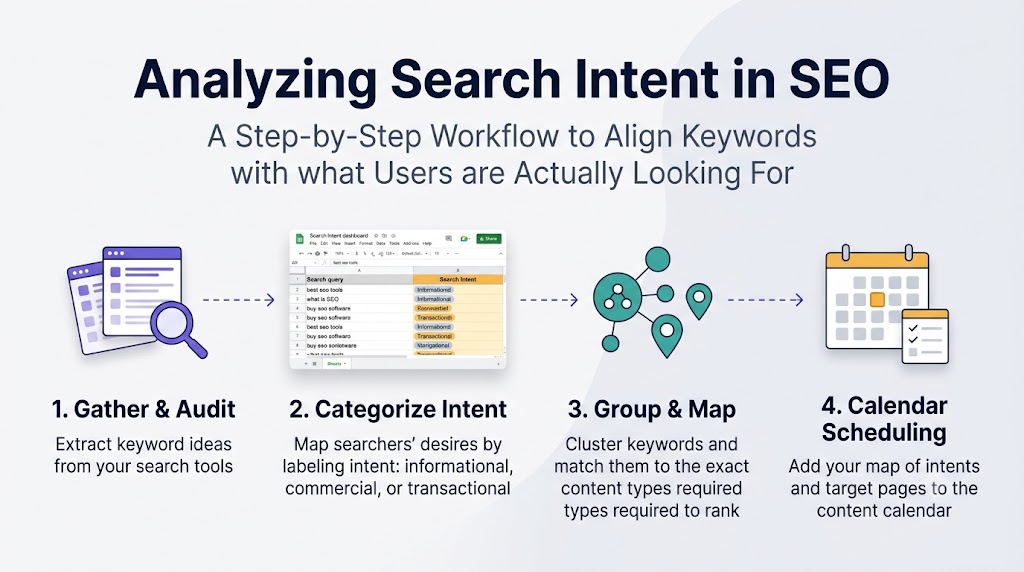
Use this workflow: first, read the query and note action words such as “how,” “best,” “buy,” or “login.” Second, review the current search results and observe the dominant formats. Third, identify the likely audience and stage in its decision process. Fourth, decide what answer or action your page should provide. Fifth, revisit the classification if the results or performance suggest your assumption was wrong.
Search intent examples
Consider the phrase “keyword research template.” It may be commercial investigation if searchers are comparing templates, or transactional if the results focus on downloads and purchase pages. “How to cluster keywords” is more clearly informational. “instaproducts24 keyword template” is navigational or brand-led. Do not classify solely by one word; look at the complete query and the page types ranking for it.
Map intent to the right page
Create a keyword-to-page map with the keyword, intent, recommended content type, primary URL, and funnel stage. Informational topics may map to educational blog posts. Commercial investigation may map to comparisons or detailed product evaluations. Transactional topics may map to product pages. Navigational topics should lead to the most relevant official destination. The exact format should reflect the query and what your site can genuinely provide.
Mistakes to avoid
Do not label every keyword with “best” as transactional; it often signals comparison. Do not publish a sales pitch for an informational query without answering the question. Do not assume all keywords containing a product name have the same intent. And do not treat intent labels as permanent: review them when search results, products, or audience needs change.
Conclusion
Search intent connects keyword research to useful content. Classify each opportunity as informational, navigational, commercial investigation, or transactional; validate it against current results; and choose the page type that best serves the searcher. SEO Keyword Research OS from instaproducts24 includes fields intended to help organize keyword intent alongside other research decisions. Use such a field as a planning aid, and verify the actual intent before publishing.
Why is search intent important in SEO?
It helps align the page with what searchers want to learn, compare, find, or do, improving relevance and usefulness.
Can a keyword have more than one intent?
Yes. A query can have mixed intent, and search results may contain several formats. Choose the dominant need your page can satisfy.
How do I check search intent?
Review the query, inspect current search results, note dominant page formats, and compare those clues with the searcher’s likely goal.
What is the difference between commercial and transactional intent?
Commercial intent usually involves evaluating options; transactional intent suggests readiness to complete an action
Should search intent be a spreadsheet column?
Yes, it can make content decisions more consistent, especially when planning many keywords or multiple contributors