Local Search Engine Optimization Checklist
Table of Contents
Navigating the world of digital marketing can feel overwhelming for brick-and-mortar business owners. If you want to dominate your neighborhood and ensure customers find you before they find your competitors, you need a robust local search engine optimization checklist. This guide is designed for small business owners, marketing managers, and entrepreneurs who need a clear, actionable path to improving their local visibility. By following these steps, you will solve the problem of “hidden” businesses and start appearing in the coveted Google Map Pack where the majority of local clicks happen.
Preparation Stage: Building Your Local Search Engine Optimization Checklist Foundation
Before you dive into the technical details, you must ensure your digital assets are ready for optimization. This stage is about setting the stage and making sure your core business information is accurate and accessible to search engines.
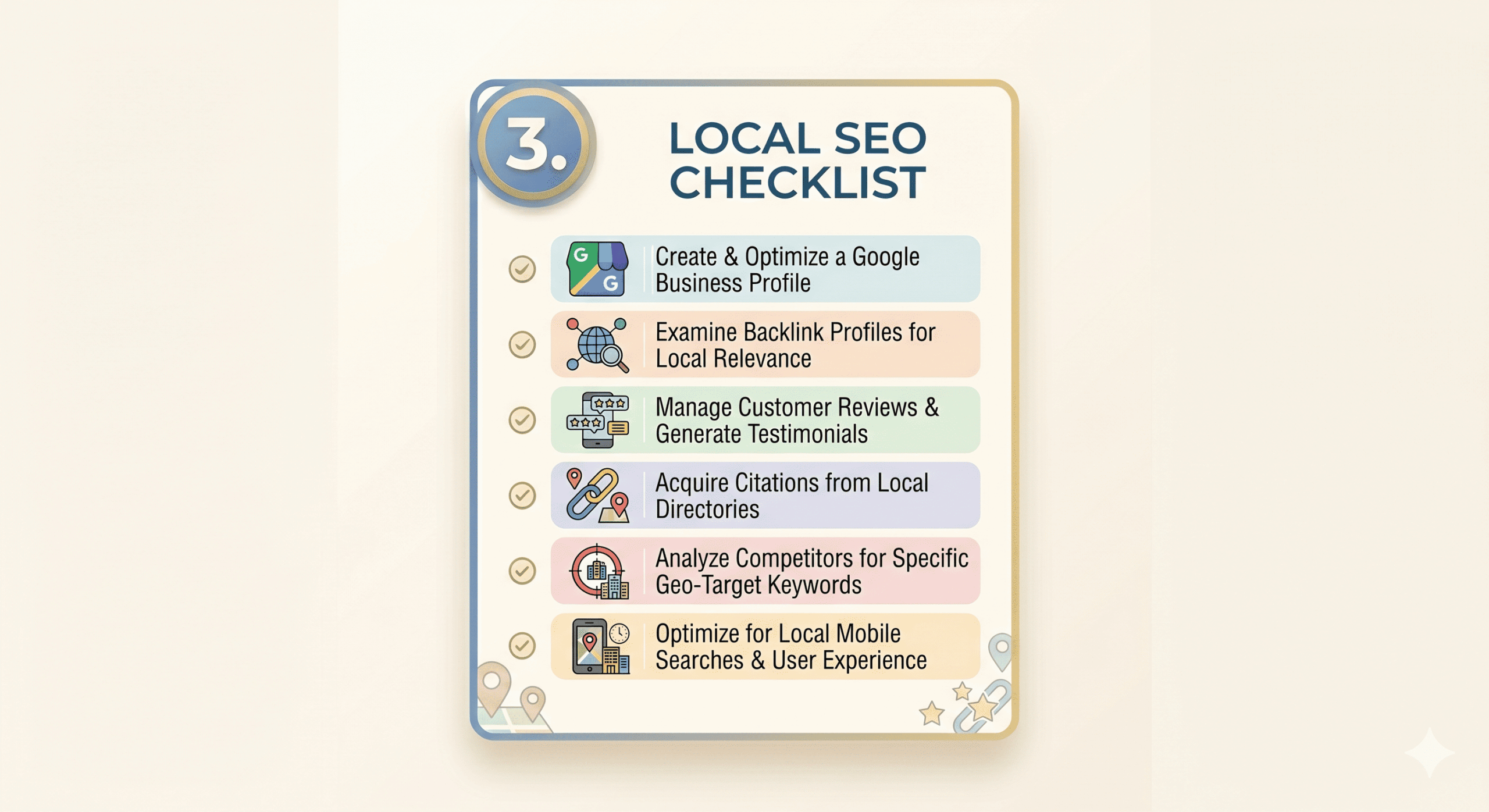
- ✅ Claim and verify your Google Business Profile (GBP) to ensure you have full control over your local presence.
- ✅ Audit your NAP (Name, Address, Phone Number) consistency across your website and social media profiles.
- ✅ Ensure your website is mobile-responsive, as most local searches happen on smartphones while users are on the go.
- ✅ Install Google Analytics and Search Console to track your progress and identify where your local traffic originates.
- ✅ Verify that your business category is correctly selected on all primary map applications, including Apple Maps and Bing Places.
Planning Stage
Effective local marketing requires a strategic approach. You cannot simply guess what your customers are searching for; you need data-driven insights to guide your content and technical decisions. During this phase, you are mapping out the specific terms and locations you want to own.
- ✅ Perform keyword research specifically for local intent, focusing on “near me” phrases and city-specific keywords.
- ✅ Create a spreadsheet for your local search engine optimization checklist to track your target keywords and current rankings.
- ✅ Analyze the top three competitors in the Map Pack for your primary services to see what they are doing differently.
- ✅ Identify the high-authority local directories and niche-specific citation sites relevant to your industry.
- ✅ Plan a content calendar that includes local news, events, or community involvement to build local relevance.
Creation Stage
Now it is time to build the assets that will drive your rankings. This stage involves creating high-quality, relevant content that speaks directly to your local audience while providing search engines with the context they need to rank your pages higher.
Content creation for local SEO is unique because it must balance user experience with geographic signals. You aren’t just writing about what you do; you are writing about where you do it and why you are the best choice in that specific area.
- ✅ Develop dedicated landing pages for every physical location your business operates in, avoiding duplicate content.
- ✅ Write unique, keyword-rich service descriptions that highlight your local expertise and community ties.
- ✅ Implement Local Business Schema Markup (JSON-LD) on your homepage and contact pages to help search engines understand your location.
- ✅ Capture and optimize high-resolution photos of your business exterior, interior, and team to upload to your GBP.
- ✅ Create a “Frequently Asked Questions” section that addresses specific concerns or landmarks relevant to your local neighborhood.
Publishing or Execution Stage
Execution is where your planning meets the public eye. This stage focuses on distributing your content and ensuring that search engines can crawl and index your local information effectively. It is about making your presence felt across the web.
Consistency is the hallmark of a successful local search engine optimization checklist execution. If search engines find conflicting information about your business, they may lower your rankings due to a lack of trust in your data.
- ✅ Update your Google Business Profile with a compelling business description and your newly optimized photos.
- ✅ Submit your business information to major data aggregators like Neustar, Infogroup, and Factual.
- ✅ Publish your local landing pages and ensure they are linked naturally within your website’s main navigation.
- ✅ Embed a Google Map on your contact page to provide a clear signal of your physical location to crawlers.
- ✅ Add your primary local keyword to the meta titles, H1 tags, and image alt text of your location-specific pages.
Promotion and Follow-up Stage: Maintaining Your Local Search Engine Optimization Checklist
SEO is not a “set it and forget it” task. To maintain your rankings and stay ahead of the competition, you must engage in ongoing promotion and maintenance. This ensures your business remains relevant and active in the eyes of both users and algorithms.
- ✅ Implement a system for requesting and responding to customer reviews on Google and Yelp to build social proof.
- ✅ Share your local blog posts and community updates on social media platforms to drive local referral traffic.
- ✅ Monitor your local search engine optimization checklist monthly to ensure all citations remain accurate and no duplicates have appeared.
- ✅ Reach out to local bloggers, news outlets, or organizations for backlink opportunities and community partnerships.
- ✅ Track your “Insights” data on Google Business Profile to see how many people are calling or requesting directions to your shop.
Pro Tips
To truly excel in local search, you need to go beyond the basics. These advanced strategies will help you gain an edge in highly competitive markets where traditional optimization might not be enough.
- Hyper-Local Content: Write about specific neighborhoods or landmarks near your business to capture very niche local traffic.
- Voice Search Optimization: Use natural language and question-based headings, as many local searches are conducted via voice assistants like Siri or Alexa.
- Video Citations: Create short videos of your business and geofence them by mentioning your city and street names in the video description.
- Google Posts: Treat your Google Business Profile like a social media feed by posting weekly updates, offers, and events to keep your profile “fresh.”
- User Engagement: Encourage customers to upload their own photos to your Google listing, as user-generated content is a powerful ranking signal.
Conclusion
Success in local search doesn’t happen by accident. It is the result of a systematic approach to building trust, relevance, and prominence within your community. By following this local search engine optimization checklist, you are laying a foundation that will drive traffic and revenue for years to come. Remember that local SEO is an ongoing journey; the digital landscape changes, but the need for clear, accurate, and local-focused information remains constant. Don’t let your competitors take your spot in the Map Pack. Start checking off these items today, optimize your presence, and watch your local customer base grow. Are you ready to put your business on the map? Start your optimization process right now!